

Overview
Basic level stats
Build time: 15 days (approx)
Format: Story PVE Supported player count: 32–64 Tested player count: 25 Tested squad count: 4 Average runtime: depends on mission specifics (excluding player load and prep time)
Player feedback responses: 6 total Average player score: 4.7/5.0 ☆
Synopsis
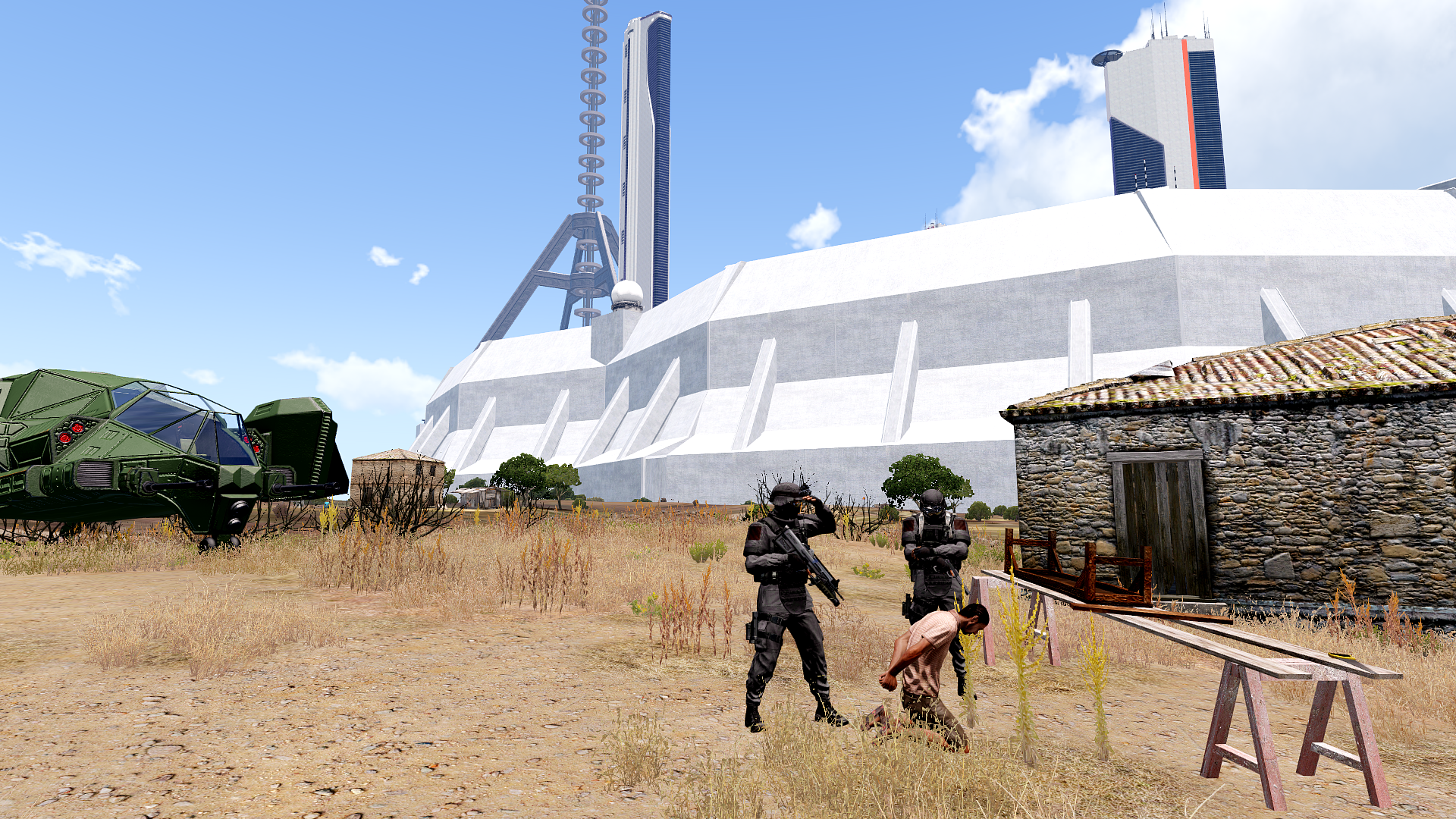
For my final campaign for the 86th STB (the Arma 3 playgroup I make maps for), I not only wanted to really push my narrative and set-dressing skills, but also to deliver unprecedented scale — for both my own work and for the Arma 3 Halo community. Most cities from community members are very flat, lacking key points of interest or playable verticality, so I built a city to remedy that, making use of an existing base-game map to apply constraints and provide external playable space.
Creating a canvas
Building the foundations
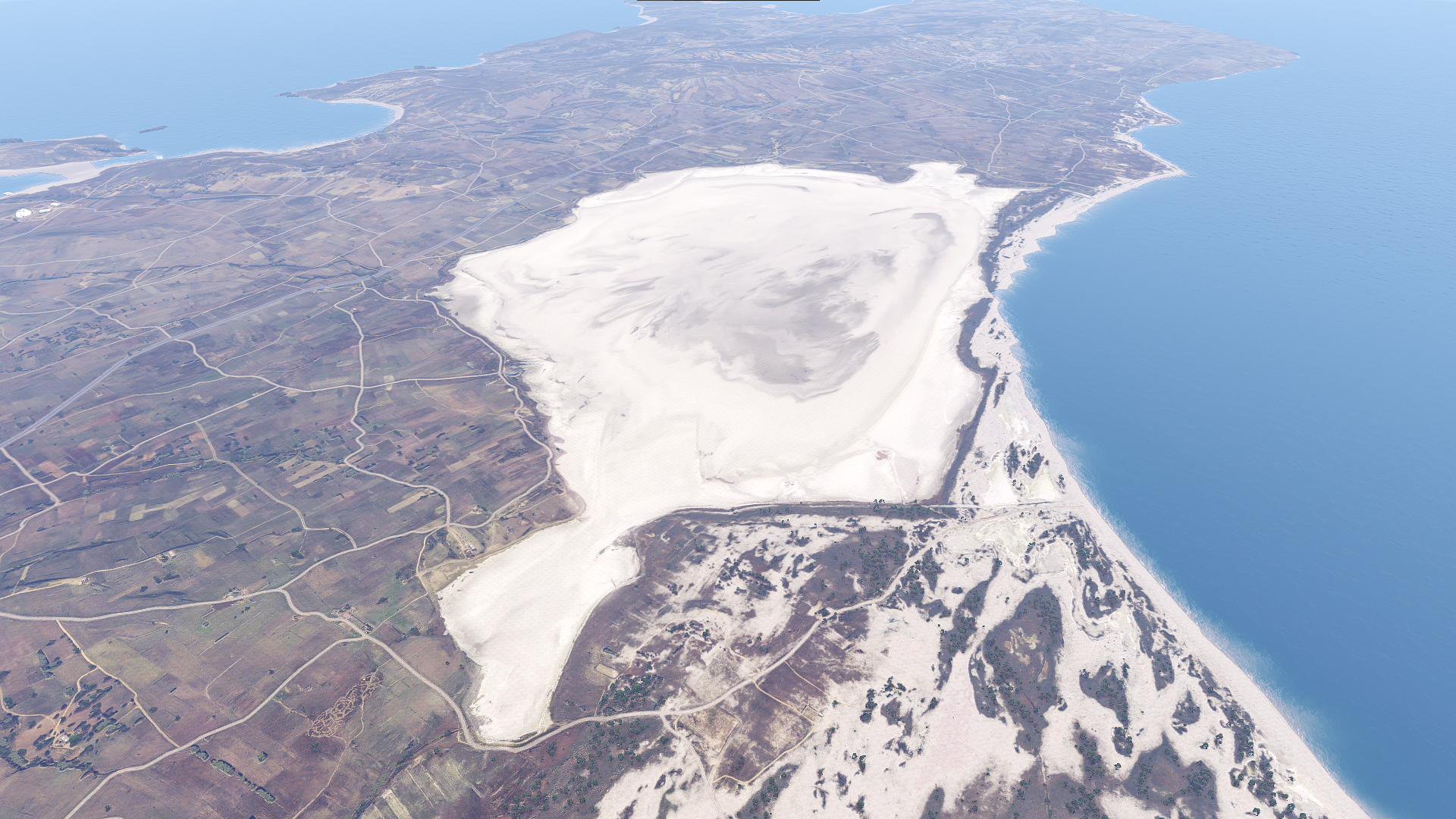
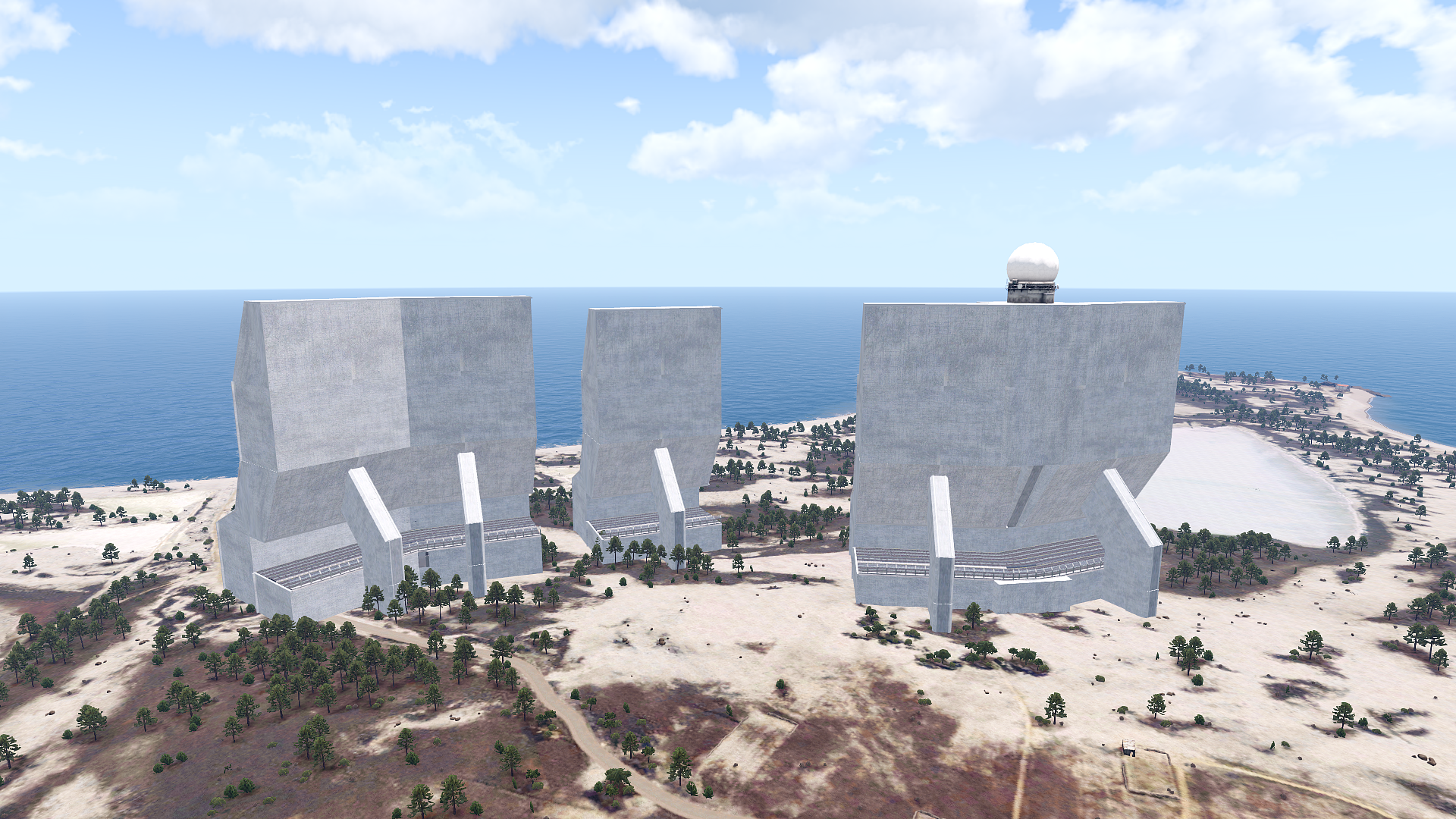
The map Altis is a huge open-world map, but with such scale comes relative sparsity. I identified a massive salt-flat that was ideal as a starting location, then prototyped city wall segments inspired by the monstrous city walls in Halo 3: ODST.
Roads appear to me to be the backbone of any city, so that was my first port of call for utilitarian design. I also wanted the walls to have more than just aesthetic use, so I built a highway into the modular structure, modifying some of them to have access ramps to ground-level.
Districts
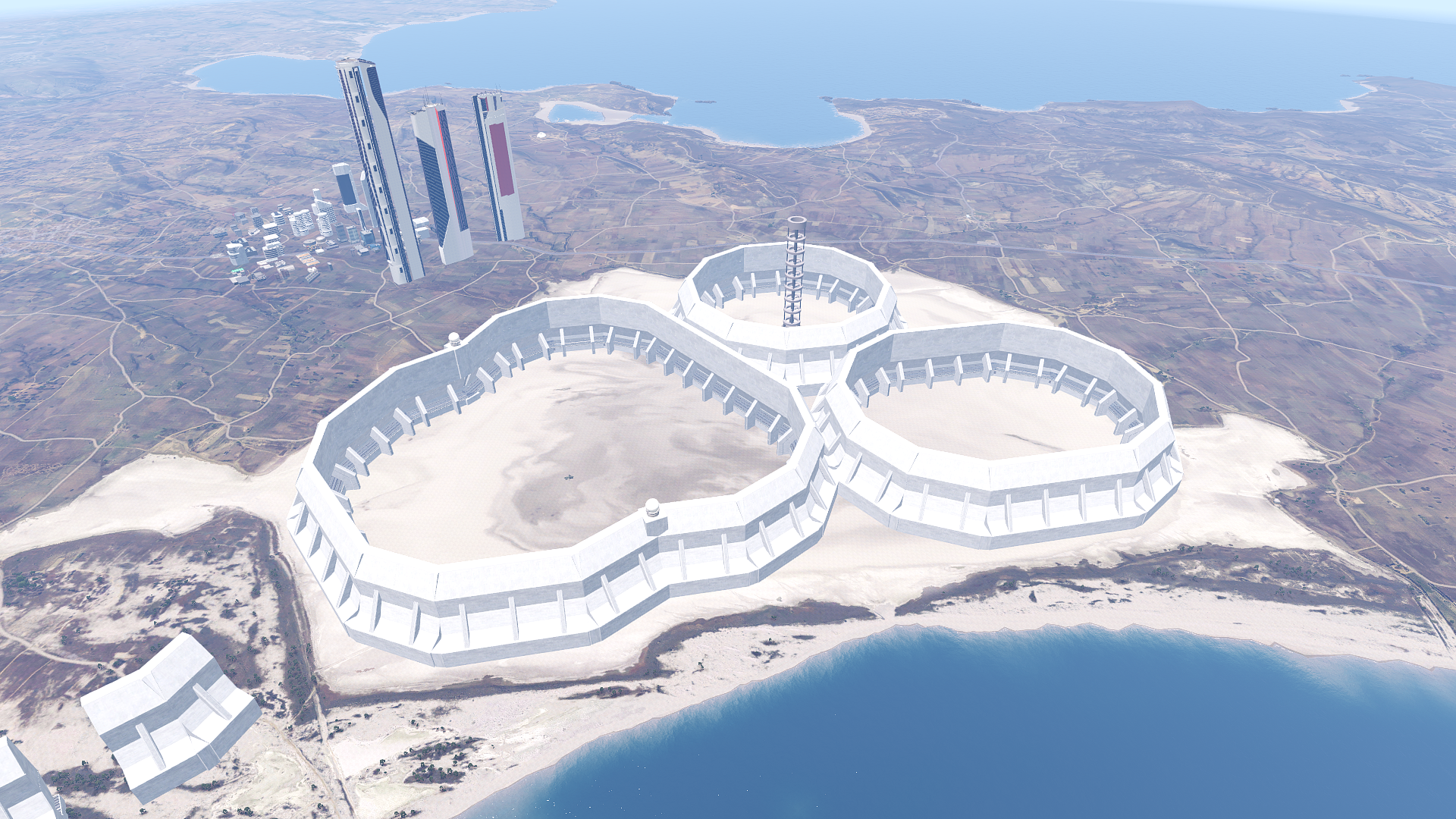
After a couple of days of experimentation, I came up with three districts and accompanying themes: the main “living” area with shops and apartments, the industrial area featuring a space-dock, and the transportation hub with access to a space-elevator.
The purpose was twofold. Firstly, I could inject variety into these areas and make them thematically interesting, bringing unique gameplay opportunities. Secondly, these districts could be used to impose performance culls — when building a mission in one district, the game master can simply delete the contents of the others.
Road development
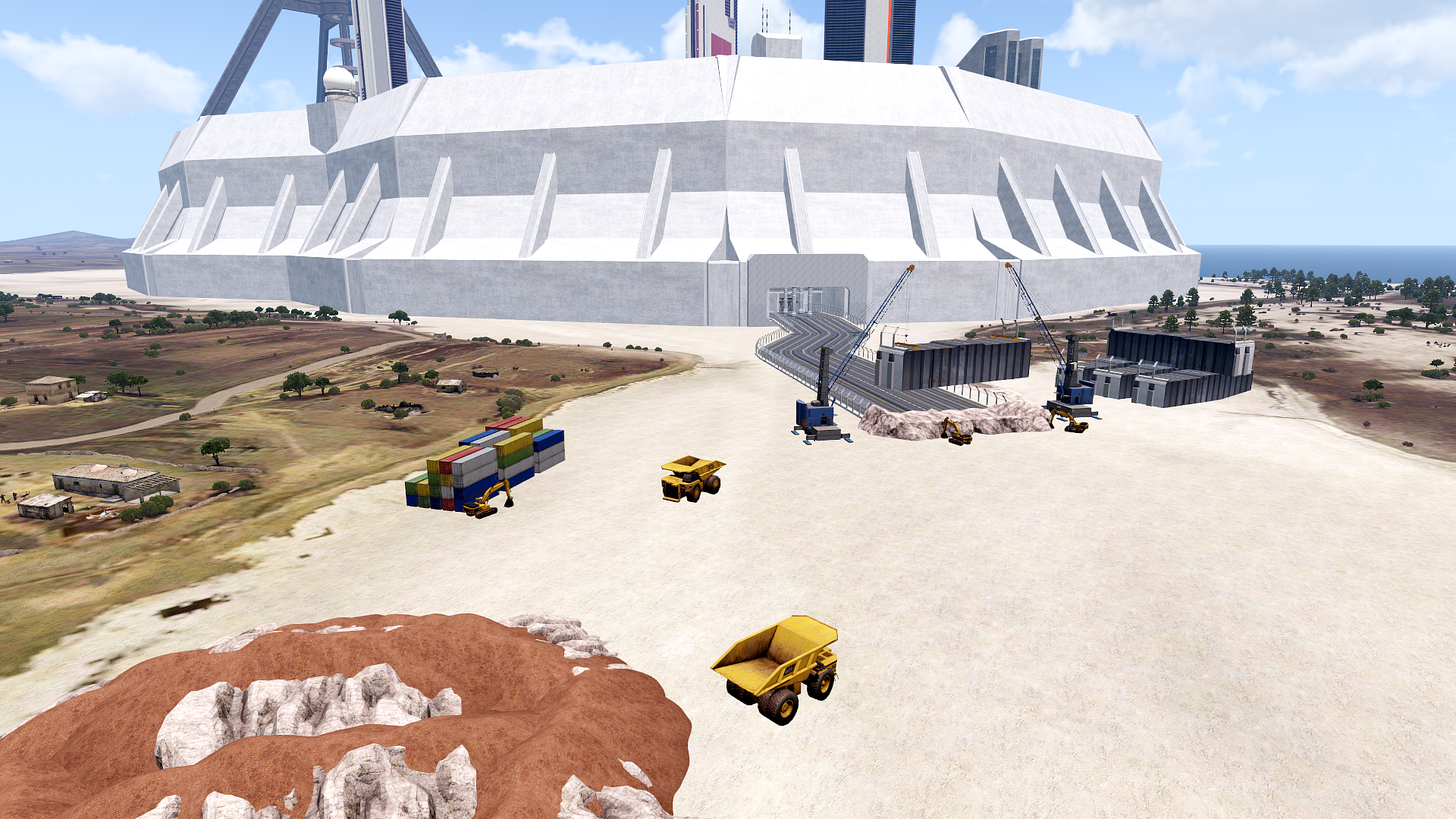
Following on with my utilitarian approach to roads, I built traversal between districts in the form of highway gate-hubs, and fleshed out a general layout using roads. The most challenging design problem was the city entrance, as it needed to feel consistent with both the inside and outside of the city. I opted to have the external portion be “under construction” to blend the two zones and make further use of an outcropping of salt-flat. Gameplay-wise this made a great garrison and defense area.
Designing a visual anchor
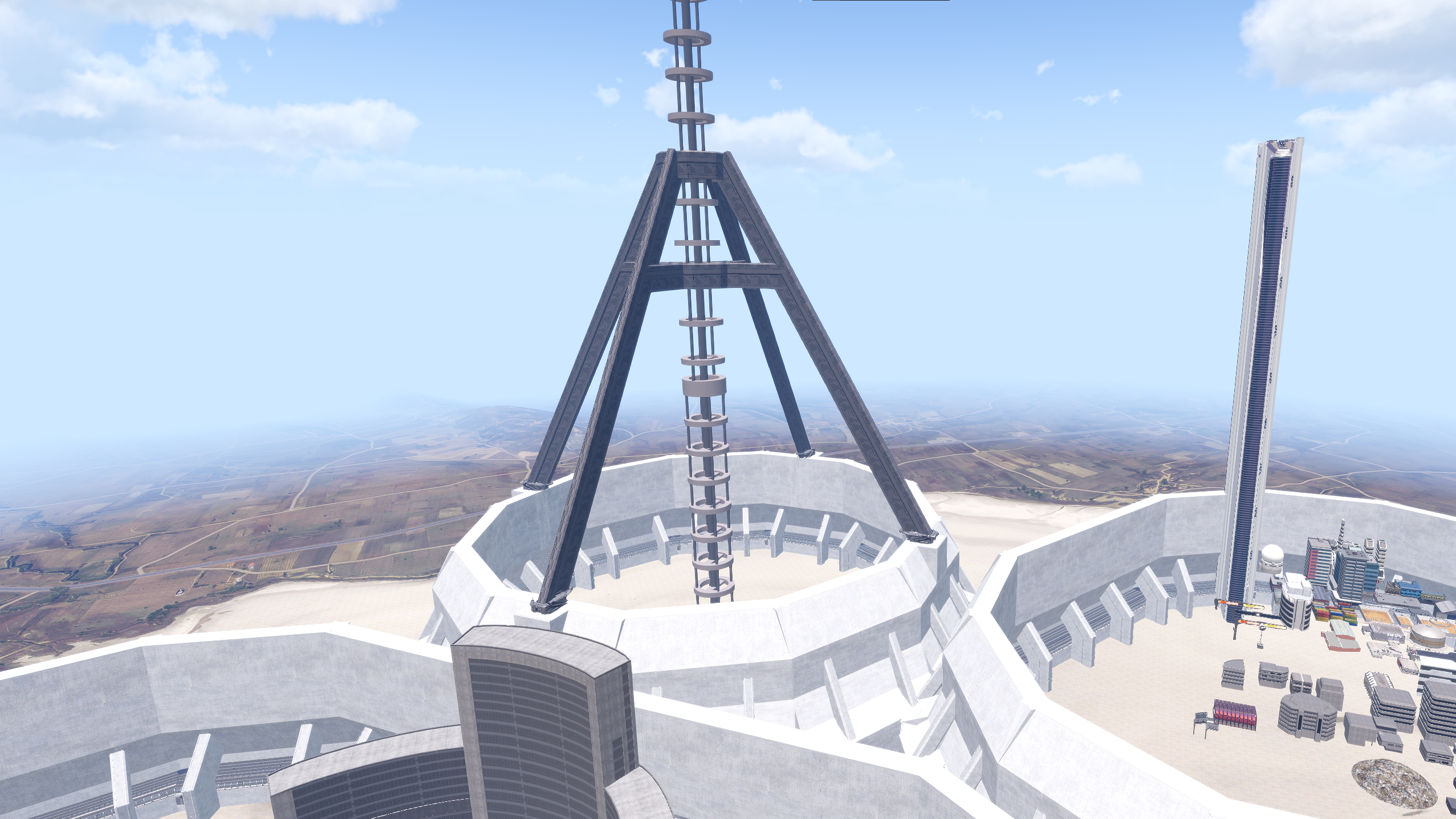
The final touch for the city canvas was nailing the space-elevator silhouette, as it would act as the visual anchor for the entire space. I took design cues from Halo 2, and created a structural collar around the base, which I believe helps it feel metaphorically and literally grounded.
With all the key components in place, it was time to start designing key areas of the city.
Revealing the city
I didn’t want to start the player off in the city itself, but instead create a more organic surprise reveal. To do this, players started in an old military research bunker, featuring a small environmental narrative throughout.
This culminated in the player finding spec-ops teams throughout the bunker, and then an old logistics tunnel containing both a road and railway. I built the bunker outside of the main play-zone with an old train acting as fast travel to the city itself, which skirted the issue of not being able to place the bunker underground due to a lack of terrain tools.
The train terminated at a partial tunnel collapse, just short of an old vehicle logistics base. Opening the large doors to said base reveals a picturesque glimpse of the massive city the players have found themselves in.
Sector 1: High-end residential
I knew I wanted the city to be population-dense, but this particular sector would stand out as a gentle, more open intro to the entire map. I achieved this through wide pavements, a play-park and mid-density apartment blocks.
There are lots of elevation points to set AI and improve combat verticality.
The single largest issue when players encountered this space was rushing through the main road and either getting separated or killed. To fix this I would swap the roles of the main and secondary routes, which would also improve sight-line blockers.
Sector 2: Shopping pass-through
Sector 2 is more freeform, with its central position in the city requiring it to be a sort of hub for the other, more distinct locations.
Due to the blended purpose it has everything from a shop plaza, cafes, a petrol station, some apartments and a central military barracks. There is no primary theme besides vehicle and pedestrian access.
To improve on my work in Sector 1, I wanted each play-space here to promote a specific gameplay experience, and heavily incorporate verticality in not just the AI placement but the player movement as well. This resulted in the raised central terrace, accessible from three points and terminating at a small food court fit for HVT or rescue operations.
The military base is designed to be hard to fight into due to the far garrison points, which, if pushed, provide a sequential CQB opportunity. Once other sectors in the main city are complete, it serves as an opportunity for players to hold this point and use the air-pads and garages as a central logistics hub.
My favourite of the three primary gameplay spaces is the construction yard, in which I’ve carefully placed some building prefabs to provide an intense, closely interconnected, and highly traversable CQB experience, where players can be supported from afar from an old hotel across the road.
Sector 3: Business district
Moving away from urban sprawl, I wanted the business district to be grand, and offer a multitude of huge open spaces and vantage points. The purpose was to force players to engage objectives differently, making heavy use of sniper gameplay, squad support tactics and carefully designated artillery barrages.
It was a secondary goal of mine to make players feel as though they were climbing the urban equivalent of a mountain to get to the “summit”, which was a linearly guarded rooftop. The payoff here was a vantage point essentially overlooking the entire city, which could be used as a command-post.